

As a supplier of drag conveyors, I often encounter questions from customers about the connectivity of drag conveyors with other equipment. This is a crucial topic as the ability to integrate drag conveyors with different types of machinery can significantly enhance the efficiency and functionality of an entire production or material - handling system.
The Basics of Drag Conveyors
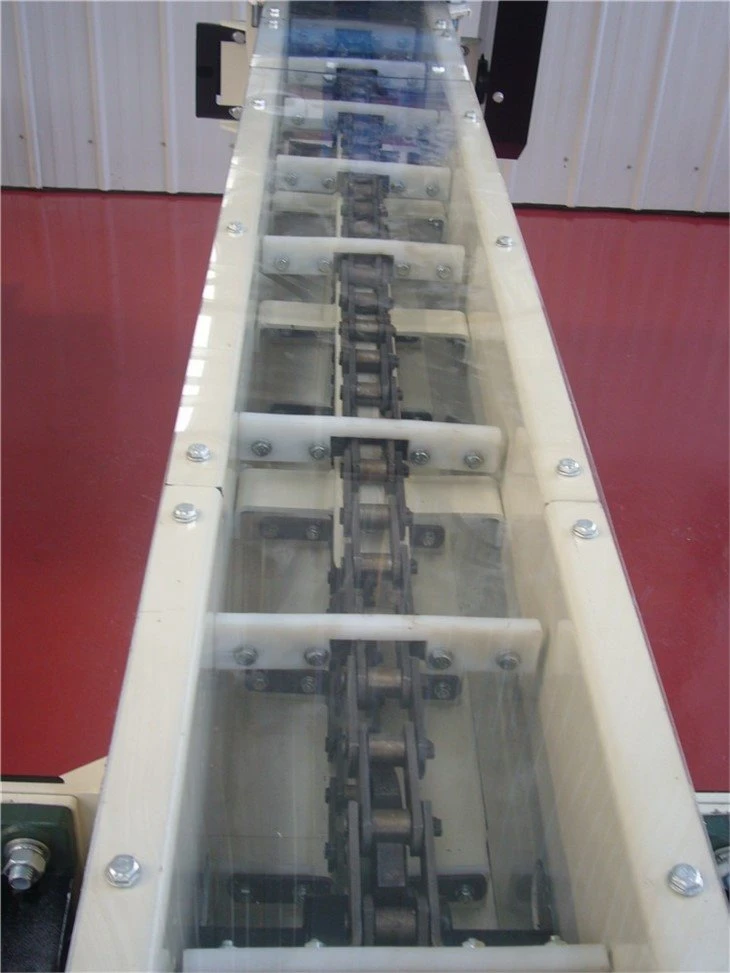
Before delving into the connectivity aspect, it's essential to understand what drag conveyors are. A drag conveyor is a mechanical handling device used to move bulk materials, such as grains, powders, and small parts, in a controlled manner. It operates on the principle of using a chain or belt with attached flights or paddles to drag the material along the trough.
Our company offers a variety of drag conveyors, including the TGSSP Series Level Drag Conveyor and Drag Chain Conveyor. These conveyors are designed with high - quality materials and advanced engineering to ensure reliable and long - term operation.

Connectivity with Feeding Equipment
One of the most common scenarios is connecting a drag conveyor with feeding equipment. For instance, in a food processing plant, a hopper is often used as a feeding device. The drag conveyor can be directly connected to the hopper to receive the raw materials, such as flour or sugar. The design of the connection is critical. The height and angle of the conveyor inlet need to be carefully adjusted to ensure a smooth flow of materials from the hopper to the conveyor.
Moreover, if the feeding equipment has a variable feeding rate, the drag conveyor should be able to adapt to these changes. Modern drag conveyors are often equipped with adjustable speed drives, which can be synchronized with the feeding equipment. This allows for precise control of the material flow, preventing over - loading or under - loading of the conveyor.
Integration with Screening and Sorting Equipment
Drag conveyors can also be effectively connected with screening and sorting equipment. In a mining operation, for example, after the raw ore is extracted, it needs to be screened to separate different sizes of particles. A drag conveyor can transport the ore from the extraction point to the screening machine. Once the screening is done, the conveyor can then carry the sorted materials to different storage areas or further processing units.
The connection between the drag conveyor and the screening equipment requires proper alignment and sealing. Any misalignment can cause material spillage, which not only leads to material loss but also poses a safety hazard. Sealing is important to prevent dust emissions, especially when dealing with fine particles. This helps to maintain a clean and safe working environment.
Linking with Packaging Equipment
In the manufacturing and consumer goods industries, drag conveyors are frequently connected to packaging equipment. After the products are manufactured, they need to be packaged for distribution. A drag conveyor can transfer the products from the production line to the packaging machine.
The key to a successful connection with packaging equipment is the speed and positioning accuracy. The conveyor speed should match the packaging cycle of the machine. If the conveyor moves too fast, the products may not be properly packaged; if it moves too slow, the production efficiency will be affected. Additionally, the conveyor should be able to position the products precisely at the packaging machine's inlet to ensure smooth packaging operations.
Technical Considerations for Connectivity
When connecting a drag conveyor with other equipment, several technical factors need to be considered. First, the power requirements of the entire system should be carefully evaluated. Each piece of equipment has its own power consumption, and the combined power demand should not exceed the capacity of the electrical supply.
Second, the control system of the connected equipment should be integrated. This can be achieved through a programmable logic controller (PLC). The PLC can monitor and control the operation of the drag conveyor and other connected devices, ensuring coordinated and efficient operation.
Third, the mechanical compatibility of the equipment is also crucial. The materials of the conveyor and the connected equipment should be compatible to avoid corrosion or wear. For example, if the conveyor is used in a corrosive environment, it should be made of corrosion - resistant materials, and the connected equipment should also have similar properties.
Advantages of Connecting Drag Conveyors with Other Equipment
There are numerous advantages to connecting drag conveyors with other equipment. One of the main benefits is increased efficiency. By automating the material transfer process between different equipment, the overall production time is reduced. Workers no longer need to manually move the materials, which also reduces the risk of human error.
Another advantage is improved product quality. Precise control of the material flow through the connection of different equipment ensures that the products are processed and packaged consistently. This leads to fewer defective products and higher customer satisfaction.
Challenges and Solutions
Despite the many benefits, there are also some challenges when connecting drag conveyors with other equipment. One of the challenges is the complexity of the system. As more equipment is connected, the control and maintenance of the system become more difficult. To address this, regular training for the operators is necessary. They should be familiar with the operation and troubleshooting of the entire system.
Another challenge is the potential for equipment breakdown. If one piece of equipment fails, it can disrupt the entire production process. To mitigate this risk, a backup system or a quick - replacement strategy should be in place. For example, having spare parts readily available for the most critical components of the drag conveyor and the connected equipment.
Case Studies
Let's take a look at some real - world examples of successful connectivity of drag conveyors with other equipment. In a chemical plant, a drag conveyor was connected to a reactor and a packaging machine. The conveyor transported the chemical products from the reactor to the packaging unit. By synchronizing the speed of the conveyor with the production rate of the reactor and the packaging speed of the machine, the plant was able to increase its production capacity by 20% and reduce the labor cost by 15%.
In a wood processing factory, a drag conveyor was integrated with a sawmill and a planing machine. The conveyor carried the freshly cut wood from the sawmill to the planing machine for further processing. The precise connection and synchronization of these equipment improved the quality of the processed wood and reduced the waste rate by 10%.
Conclusion
In conclusion, a drag conveyor can indeed be connected with a wide range of other equipment, including feeding, screening, sorting, and packaging devices. The successful connectivity depends on careful design, proper technical considerations, and effective control and maintenance strategies. As a drag conveyor supplier, we are committed to providing high - quality conveyors and professional technical support to help our customers achieve seamless integration of their production systems.
If you are interested in our drag conveyors and would like to discuss how they can be connected with your existing or planned equipment, please feel free to contact us for a detailed consultation. Our team of experts is ready to assist you in finding the best solutions for your specific needs.
References
- "Conveyor Technology Handbook" by Conveyor Equipment Manufacturers Association
- "Industrial Material Handling Systems" by John A. White
- Industry reports on material handling equipment connectivity trends from leading research institutions