

As a cooler supplier, one question that frequently arises from our clients is whether coolers require ventilation. This is a crucial topic that not only affects the performance of the coolers but also has implications for safety, energy efficiency, and the overall lifespan of the equipment. In this blog, I'll delve into the science behind coolers and ventilation, sharing insights based on our industry experience and research.

The Basics of Cooler Operation
Before we discuss ventilation, let's understand how coolers work. Coolers, whether they are industrial or domestic, operate on the principle of heat transfer. They are designed to remove heat from a specific area or substance, thereby lowering the temperature. This is typically achieved through a refrigeration cycle that involves a compressor, condenser, expansion valve, and evaporator.
The compressor compresses the refrigerant gas, increasing its temperature and pressure. The hot, high - pressure gas then flows to the condenser, where it releases heat to the surrounding environment and condenses into a liquid. The liquid refrigerant passes through the expansion valve, which reduces its pressure and temperature. Finally, the cold refrigerant absorbs heat from the area to be cooled in the evaporator, and the cycle repeats.
Why Ventilation Matters
- Heat Dissipation
The condenser in a cooler releases a significant amount of heat during the refrigeration cycle. Without proper ventilation, this heat can build up around the cooler, causing the condenser to overheat. When the condenser overheats, its efficiency drops, and the compressor has to work harder to maintain the desired cooling effect. This not only increases energy consumption but also puts additional stress on the components, potentially leading to premature failure.
For example, in an industrial setting where large - scale coolers are used to cool manufacturing processes, inadequate ventilation can result in a significant increase in energy costs. The extra heat can also affect the surrounding equipment and the working environment, making it uncomfortable for employees.
- Air Quality
Ventilation helps to maintain good air quality around the cooler. In a closed or poorly ventilated space, the air can become stagnant, and the concentration of pollutants such as dust, moisture, and volatile organic compounds (VOCs) can increase. These pollutants can accumulate on the cooler's components, especially the condenser coils, reducing their heat - transfer efficiency.
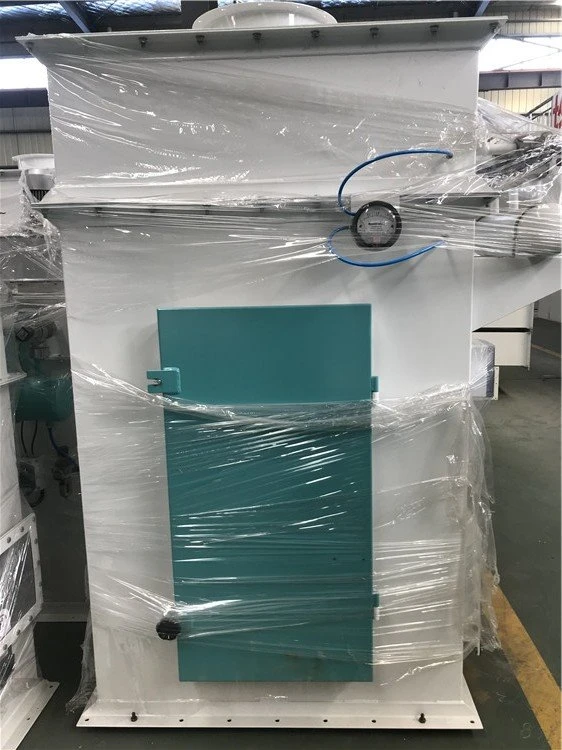
In the food industry, for instance, maintaining clean air around coolers is essential to prevent contamination. A Dust Collector for Food Industry can be used in conjunction with proper ventilation to ensure that the air around the coolers is free from dust and other contaminants that could affect food safety.
- Safety
Some coolers use refrigerants that can be harmful if they leak. In a well - ventilated area, any leaked refrigerant can be quickly diluted and dispersed, reducing the risk of exposure to harmful levels of the substance. Additionally, proper ventilation can help prevent the build - up of flammable refrigerants, which could pose a fire or explosion hazard.
Types of Ventilation for Coolers
-
Natural Ventilation
Natural ventilation relies on the movement of air due to differences in temperature and pressure. This can be achieved by installing the cooler in an area with good air circulation, such as near an open window or door. Natural ventilation is cost - effective and requires no additional energy input. However, it may not be sufficient in areas with high heat loads or where precise temperature control is required. -
Mechanical Ventilation
Mechanical ventilation uses fans or blowers to move air around the cooler. This type of ventilation can be more effective than natural ventilation, especially in enclosed spaces or areas with poor air circulation. There are different types of mechanical ventilation systems, including exhaust fans, supply fans, and combination systems.
Exhaust fans are used to remove hot air from the area around the cooler, while supply fans bring in fresh air. Combination systems use both exhaust and supply fans to create a more balanced airflow. For example, in a large industrial cooler room, a combination ventilation system can be used to ensure that the air is constantly refreshed and the heat is effectively removed.
Ventilation Requirements for Different Types of Coolers
-
Domestic Coolers
Domestic coolers, such as refrigerators and air conditioners, usually have relatively low heat loads. However, they still require some form of ventilation. For refrigerators, it is recommended to leave at least a few inches of space between the back of the refrigerator and the wall to allow for proper air circulation. This helps the condenser to dissipate heat effectively. -
Industrial Coolers
Industrial coolers, on the other hand, have much higher heat loads and often require more sophisticated ventilation systems. In industrial settings, coolers may be used to cool large volumes of liquids or gases, or to maintain specific temperature and humidity levels in manufacturing processes.
For example, in a chemical plant, coolers may be used to cool chemical reactions. These coolers need to be properly ventilated to prevent the build - up of heat and to ensure the safety of the workers. An LNGM Dust Collector can be integrated into the ventilation system to remove dust and other particulate matter that may be generated during the cooling process.
- Transportation Coolers
Coolers used in transportation, such as refrigerated trucks and containers, also require ventilation. In these applications, ventilation helps to maintain a consistent temperature inside the cooler and prevents the build - up of condensation. A well - ventilated transportation cooler can ensure that the goods being transported, such as food and pharmaceuticals, remain in good condition.
The Role of Conveying Equipment in Ventilation
Conveying equipment can play an important role in the ventilation of coolers, especially in industrial settings. For example, a U - drag Chain Conveyor can be used to transport materials in and out of a cooler room. By carefully designing the layout of the conveying equipment, it is possible to create a more efficient airflow pattern in the room.
The movement of the conveyor can also help to stir up the air, preventing the formation of stagnant pockets. Additionally, the conveyor can be used to transport heat - generating equipment away from the cooler, reducing the overall heat load in the area.
Conclusion
In conclusion, ventilation is an essential aspect of cooler operation. It is crucial for heat dissipation, air quality, and safety. Whether you are using a domestic cooler or an industrial - scale cooler, proper ventilation can improve the efficiency of the cooler, reduce energy consumption, and extend the lifespan of the equipment.
As a cooler supplier, we understand the importance of ventilation and can provide you with the right advice and solutions for your specific needs. If you are in the process of selecting a cooler or need to upgrade your existing ventilation system, we encourage you to contact us for a detailed consultation. Our team of experts can help you design a ventilation system that is tailored to your cooler and your application. We look forward to working with you to ensure that your cooling needs are met efficiently and safely.
References
- ASHRAE Handbook of Refrigeration. American Society of Heating, Refrigerating and Air - Conditioning Engineers.
- Industrial Refrigeration Handbook. CRC Press.